Saturday, August 31, 2013

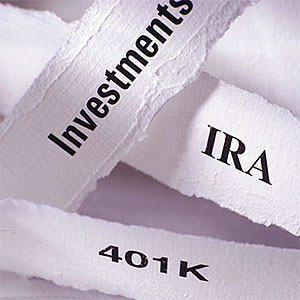
Are your holdings organized for your tax savings for 2013?

Are your holdings organized for tax savings?

Now that your 2012 taxes are filed, it's time to re-examine your investments to determine if a different strategy would save you money on taxes.

By MSN Money Partner Apr 18, 2013 2:14PM
This post is by Andrea Coombes of MarketWatch.com.

(© Photodisc/SuperStock)Planning for taxes is complicated, of course, and will vary depending on your situation. Consulting an expert makes sense, and now that the annual April 15 filing deadline is past, some tax pros may have more time to chat about a long-term strategy.

And don’t forget you’re at the whim of Congress, which can mean smaller changes are better than drastic ones.

"You don’t want to make a huge decision today that you think is going to be this great tax move and have the tax law change in 10 years," said Scott Halliwell, a certified financial planner with USAA, a financial-services firm for military personnel, in San Antonio. "With taxes, everything in moderation is better than all or none,” he said.

Here are eight strategies to consider.
 
Give yourself options
People often argue over whether a traditional 401k or IRA, on one hand, or a Roth IRA on the other is best for retirement savings. But many financial planners say it’s smart to go with each kind of account, and possibly a taxable account, too.
"The people that have all three of these buckets give us the most flexibility to manage their taxes later in life," said Scott Cramer, president of Cramer & Rauchegger, a financial planning firm in Maitland, Fla.

For example, each year retirees could pull just enough taxable income from their IRAs to avoid bumping into a higher tax bracket, and use after-tax income from the Roth for the rest of their needs.

In addition to gaining flexibility, you mitigate against tax uncertainty. Savers are often told the best vehicle for them depends on their retirement tax bracket. But given tax-law uncertainty,

"It’s almost an absurd thing to try to figure out," Halliwell said. "If you went all in in the pretax [traditional IRA] and it turned out your tax bracket in retirement was higher, that’s not going to do you any good."

Consider asset location
You’ve come up with your asset allocation — but now how do you divvy up your chosen mix of stock, bond and alternative holdings into various investment locations, depending on tax status?

Even the professionals disagree on what’s best. And what’s best for you will depend on your tax bracket, how long you’ve owned the asset before you sell, and other factors.

Mitchell Freedman, of MFAC Financial Advisors Inc., in Westlake Village, Calif., said he often puts the majority of his clients’ bond holdings in tax-deferred accounts such as 401ks and IRAs, to delay the income-tax hit on the interest.

He said he often puts stocks into taxable accounts, where many investors enjoy a 15% long-term capital gains tax rate. (Investors in the bottom two tax brackets generally pay zero on those gains currently.)

For his part, Brett Horowitz, a certified financial planner and principal at Evensky & Katz in Coral Gables, Fla., said: "Any kind of high-yielding bonds or income-yielding stocks — all those investments that would cause taxes to be high — those go to the top of the list in terms of assets that should be sheltered or put in an IRA."

Tax-exempt municipal bonds, stock index funds that don’t pay out large annual capital gains and similar tax-efficient investments “would go in taxable accounts,” Horowitz said.
 
Rebalance your way to tax efficiency
Organizing your money for maximum tax efficiency is easier if you’re sitting on cash and can divvy up your money into different accounts. It’s harder if your money is already invested. You run the risk of owing a big tax bill as you sell and reinvest your money on the path to tax efficiency.

"It can be done, but it’s got to be done carefully, sometimes over the course of years," Halliwell said.

A good time to focus on tax efficiency? Each time you rebalance your portfolio.

Sometimes there’s no easy fix for a tax-inefficient portfolio. Halliwell described a couple whose retirement portfolio was built almost entirely on one company’s stock — shares purchased 40 years earlier, now worth millions of dollars.

The problem? They invested in that stock through their IRA, all distributions from which are taxed at ordinary income-tax rates rather than the lower long-term capital gains rates they would have enjoyed in a taxable account.

In the end, the couple divested a small amount of their holdings each year for several years so as to avoid a single big tax hit. But if they’d originally invested in a taxable account, they likely would have paid only a 20% capital-gains tax rate, versus the 35% they owed. (Still, Halliwell said, that’s "a good problem to have.")
 
Re-examine your bond portfolio
If you rely on interest from bonds for a big chunk of retirement income, it may make sense to shift into tax-free bonds.

"The yield on municipal bonds tends to be lower than the yield on taxable bonds, but [investors] may get more after-tax return," Freedman said. Freedman adds that such a move can also increase a portfolio’s diversification.

Whether the move makes sense depends on your tax bracket. If your tax rate dropped when you retired, you may want to shift from tax-free bonds to higher-yielding taxable bonds.

For example, assume tax-free bonds yield 3% and taxable bonds yield 4%. “If you’re under the 25% tax bracket, you’d rather have the higher paying taxable bond even after paying the taxes,” Horowitz said.
 
Proceed slowly
When they first retire, retirees often immediately withdraw a large lump sum from their retirement accounts, Cramer said, maybe to pay off a mortgage or buy that longed-for boat.

If the money you withdraw is taxable, it can push you into a higher tax bracket.

"People need to think about the long-term impact," Cramer said. If you pay off a 5% mortgage but the taxable IRA distribution bumps you up into the 25% tax bracket, you’ve made a bad move.
 
Consider the unexpected
Everyone has a unique financial situation that can affect the possible ramifications of their money moves. And your health, in particular, can change that situation.

Freedman described an elderly couple who had a large taxable portfolio invested in a handful of blue-chip stocks with low cost basis.

You’d think this elderly couple should immediately diversify, right? Not so. Given their poor health, the couple was likely to bequeath their estate fairly soon. If they sold their holdings, they’d face a large capital-gains tax hit. But if they bequeathed those holdings, their heirs would enjoy a step-up in cost basis to the value on the date of death.

"If people are older, if their health is questionable, they may want to avoid selling securities that have a very low basis," Freedman said.
 
Manage Roth conversion taxes
For some, the early years of retirement present a Roth conversion sweet spot. "We have in our case a lot of clients who maybe just retired, they’re now in a lower income stage and they haven’t yet hit 70 where they’re [required to take] IRA distributions," Horowitz said.

That is, their tax rate is relatively low — making it a good time for small, periodic conversions over a few years, since the amount converted is subject to tax.

Converting a portion of an IRA to a Roth can make sense for two reasons, Horowitz said.

First, he expects Congress to hike tax rates eventually, so many retirees are paying lower taxes now than they would later. Two, this strategy reduces retirees’ total holdings in taxable IRAs, so retirees’ future required distributions will be smaller, helping to keep taxes lower, including possible taxes on Social Security benefits.
 
Don’t waste low-tax years
If you know your tax bill in a particular year is going to be lower than usual — for example, if you’ve got a lot of short-term investment losses you’re writing off — and you’ve got a traditional IRA, consider it an opportunity to convert a portion of that account to a Roth IRA.

"If something is going to bump you down in a tax bracket, you might consider filling that tax bracket back up with a Roth conversion," said Stephen Horan, head of private wealth at The CFA Institute.


Thursday, August 29, 2013

WIthholding-Interesting Information on taxes withholding


Withholding

Taxes can be withheld on several types of income. Directory of articles about withholding on wages, distributions from a retirement plan, Social Security benefits, unemployment compensation and gambling winnings. Also, articles about backup withholding and Form W-4.

Tax Withholding on Wage Income
Employers are required to withhold federal income tax, Social Security tax, Medicare tax, and state and local taxes from the wages of their employees. Describes withholding and withholding allowances.

Withholding on Retirement Plan Distributions
Distributions of funds from a retirement plan are subject to withholding for federal income tax. The rate at which federal income tax is withheld depends on the type of retirement plan and the frequency of the distributions. This article briefly discusses the withholding rules for different types of retirement plans such as pensions, annuities, 401(k) plans and individual retirement accounts.

Backup withholding is a type of withholding for federal income taxes on certain types of income. Backup withholding may be mandatory in certain circumstances.

Form W-4
Definition: Form W-4 is used to figure the right amount of federal income tax to have withheld from your paycheck.


Adjusting Tax Withholding from Your Paycheck
Revising your paycheck withholding involves several steps. In this article I walk you through all the steps I take whenever a client ask me to review their current level of withholding. The key is using available calculators available on the Web to make sure that you have just enough tax deducted from your pay.


US Withholding for Canadian Independent Contractors
Canadian citizens who have income from US sources should fill out Form W-8BEN to claim a reduce amount of income tax withholding. Find out how to qualify for benefits under the US-Canada Tax Treaty and how to fill out Form W-8BEN.


Publication 505, Tax Withholding and Estimated Tax
The IRS discusses tax withholding and estimated taxes in-depth in Publication 505. Link goes to the HTML version of this publication.


Form W-4, Employee's Withholding Allowance Certificate
Employees use Form W-4 to choose a level of withholding for federal income tax. On this page, taxpayers can download Form W-4 in PDF format.


Form W-4V, Voluntary Withholding Request
Taxpayers can use Form W-4V to request withholding for federal income tax from unemployment compensation benefits, from Social Security benefits, Commodity Credit Corporation loans, and crop disaster payments. From this page, taxpayers can download Form W-4V in PDF fo

Wednesday, August 28, 2013

The tax break you are missing out on

The Tax Break You're Missing Out On


Most workers are eligible to contribute up to $5,500 to an IRA in 2013 and get a tax deduction on the amount they save. A worker in the 25 percent tax bracket who contributes $5,500 to a traditional IRA this year would pay $1,375 less on his 2013 tax bill. But few people save enough to maximize this tax break.
[Read: 10 Trendy 401(k) Plan Perks.]
A recent Fidelity Investments analysis of nearly 7 million IRAs found that the average IRA contribution was $3,920 for tax year 2012, down $10 from $3,930 in 2011. Average traditional IRA contributions ranged from $3,170 among 20-somethings to $4,840 for people in their 60s.
An Employee Benefit Research Institute analysis of just over 1.6 million IRA accounts found that the average amount contributed in 2011 was $3,723. An IRA contribution of $3,723 will save you $930.75 if you are in the 25 percent tax bracket or $558.45 if you pay a 15 percent income tax rate. Taxes won't be due on these traditional IRA contributions until you withdraw the money from the account.
People age 50 and older are eligible to contribute $1,000 more to IRAs than younger people, up to $6,500 in 2013. And the average IRA contribution does jump from $4,090 for 40-somethings to $4,780 among people in their 50s, Fidelity found. Once you turn age 70 1/2 you can no longer make traditional IRA contributions, but you can still save in a Roth IRA.
To completely max out an IRA, you would need to save about $458 per month, or $542 monthly if you are age 50 or older. Alternatively, you could also contribute the money as a lump sum or other installments of your choosing throughout the year. But less than half (47 percent) of people who participated in 2011 contributed the maximum amount, EBRI found.
[Read: How to Tell if You Have a Lousy 401(k) Plan.]
The ability to claim a tax deduction for your traditional IRA contributions is limited if you are also eligible for a 401(k) or similar type of retirement account at work. The IRA tax deduction is phased out for couples with a modified adjusted gross income over $95,000 ($59,000 for singles) in 2013. And couples who earn $115,000 or more ($69,000 for singles) are not eligible for this tax deduction if they also have a retirement account at work. If you are not covered by a retirement plan but your spouse is, the deduction begins to be phased out once your joint modified AGI exceeds $178,000 and is eliminated when your AGI hits $188,000.
You can additionally claim a tax credit for your 2013 IRA contribution if your AGI is below $59,000 for couples, $44,250 for heads of household or $29,500 for singles and you are not a full-time student or dependent on someone else's tax return. The amount of the credit ranges from 10 to 50 percent of the amount you contribute to a retirement account up to $2,000 for individuals and $4,000 for couples. The maximum possible credit is $1,000 for individuals and $2,000 for couples.
[Read: Why You Should Open a Roth IRA.]
IRA contributions for 2013 must be made by April 15, 2014. If you wait until April to deposit money in an IRA you can get nearly immediate tax savings, but you also miss out on a year's worth of tax-deferred investment growth

Tuesday, August 27, 2013

Tax Breaks for Your Vacation Home

Tax Breaks for Your Vacation Home

Summer rentals for 2013 have been stronger than they have been in years, and purchases of vacation homes are on the rise after years of a housing slump. There are tax write-offs for owning a second home. What’s more, the vacation home can provide rental opportunities.
It’s understandable to think of vacation homes as only in terms of beachfront or lakefront properties. The tax law doesn’t think this way. Vacation homes aren’t limited to waterfront condos or ski chalets; they can include a boat or an RV, as long as the property includes sleeping, cooking, and toilet facilities. Even time shares may qualify for certain tax breaks that go with home ownership.
 
Reporting rental income
Rental income usually is includable in gross income, but can be offset by certain expenses related to the vacation home (explained below). However, there’s one exception that can give you tax-free income. You do not have to report the rent you receive for a rental that is no more than 14 days. Thus, if you rent your beachfront property for 10 days, the rent you receive is tax free.
 
Deducting rental expenses
Three costs related to the ownership of a vacation home can be taken if you itemize deductions. These deductions are allowed without regard to whether you rented the property:
  • Real estate taxes. Any property taxes paid on a vacation home are deductible; there is no limit.
  • Mortgage interest. You can designate a second home to qualify for deductible mortgage interest. The same limits for a primary residence apply to a vacation home ($1 million for acquisition debt, plus $100,000 for home equity debt). Caution: If you pay any points to obtain the mortgage, the points are deductible ratably over the term of the loan (they can’t be deducted in the year of the home’s purchase like they can with a main home).
  • Casualty and theft losses. If your insurance doesn’t cover a loss, you may take a tax deduction. Each occurrence is reduced by $100, and your total loss deduction is limited to the excess of 10% of your adjusted gross income.
 
However, the amount of time you use your home and the days it’s rented to others at a fair rent can affect the extent of other deductions:
  • If the rental is no more than 14 days—you can’t deduct any maintenance or other costs beyond those allowed for real estate taxes, mortgage interest, and casualty or theft losses.
  • If the rental is more than 14 days and your personal use is more than 14 days or 10% of the rental days—you can deduct some additional expenses, such as maintenance, insurance, and depreciation, but only to the extent of rental income. It is unlikely that a time-share owner who uses his property can ever qualify for these added deductions because of the numbers; his or her personal use usually is not more than 14 days or 10% of the rental days.
  • If the rental is more than 14 days but personal use is not more than 14 days or 10% of the rental days—you are considered to hold investment property. You can deduct all of your expenses, subject to the passive loss rules. These rules generally limit annual rental losses to the extent of rental income. However, those with adjusted gross income of no more than $100,000 are allowed to claim rental losses each year up to $25,000 if they can show active participation (which includes setting the terms for a rental and arranging for a rental agent).
 
Conclusion
When owning or buying a second home, be sure to factor in the tax breaks and opportunities you can use to minimize the cost of ownership, enjoy rental income, and ultimately reap a profit.

Monday, August 26, 2013

For all those worried about the Affordable Health Care Law(OBAMARE)

Final rules issued on IRS disclosure of tax return information under health care law


By Sally P. Schreiber, J.D.

August 13, 2013


The IRS issued final regulations about how it will release certain tax return information to the Department of Health and Human Services (HHS), as required by 2010’s health care legislation (T.D. 9628). The final regulations, which will be effective Wednesday, describe certain items the IRS will disclose in addition to those required by Sec. 6103(l)(21). The final rules adopt the proposed rules issued last year with two changes (REG-119632-11).
The Patient Protection and Affordable Care Act, P.L. 111-148, required HHS to establish a program under which affordable insurance exchanges can determine whether individuals are eligible to enroll in qualified health plans under the exchange and are eligible for other benefits under the health care acts. Sec. 6103(l)(21) permits the IRS to disclose to HHS certain tax return information to help the exchanges determine taxpayer eligibility where income verification is required.
Sec. 6103(l)(21) identifies specific items of return information that will be disclosed and permits disclosure of other items prescribed in regulations. The statutory items include the taxpayer’s identity and filing status, the number of personal exemptions claimed, and the taxpayer’s modified adjusted gross income (MAGI).
Under the final regulations, items the IRS will disclose include adjusted gross income, any amount excluded under Sec. 911, tax-exempt interest, the fact that the taxpayer did not have a filing requirement for the year, and the fact that the taxpayer did not file a return for the year reconciling advance payments of the Sec. 36B premium tax credit with the amount of the premium tax credit available for the year.

In response to information the IRS received from HHS that the Social Security Administration (SSA) would be providing the total amount of Social Security benefits a taxpayer receives, the IRS added to the list of items required to be disclosed the amount of the taxpayer’s Social Security benefits that are included in income under Sec. 86. This information will allow exchanges to determine a taxpayer’s MAGI.

The second change from the proposed regulations was to eliminate a reference to adoption taxpayer identification numbers (ATINs) from the list of identification numbers being verified by the SSA because the SSA has no record of ATINs and will not verify those numbers. 

Sunday, August 25, 2013

Taxes: The most and least friendly states for retirees

Taxes: The most and least friendly states for retirees

3 hours ago
California may be beautiful and popular, but state income tax can reach 13.3 percent -- tough on retirees on a fixed income.
Justin Sullivan / Getty Images
California may be beautiful and popular, but state income tax can reach 13.3 percent -- tough on retirees on a fixed income.
The key to making your nest egg last is to spend less money than you earn.
Due to state tax law differences, however, you'll soon learn that where you live during retirement largely dictates what you spend.
Some states, such as Minnesota and Vermont, impose a hefty tax on retirement income. Alaska, Nevada and Wyoming, which do not have income tax, are much friendlier, have a lesser impact.
The sheer size of the aging baby boomer population has encouraged most states to consider more tax-favorable legislation for seniors, said Kathleen Thies, state tax analyst for CCH tax services firm in Riverwoods, Ill. Some relief programs have already been enacted.
Below are the top 10 least friendly states, tax-wise, and the also the friendliest. Because tax laws impact retirees differently, depending on their financial circumstances, we did not rank the states, but rather presented them in alphabetical order.
The least friendly states
California
State income tax: 1% - 13.3%
State sales tax: 7.5% (combined state, local rate)
Mean property tax rate as a percentage of mean home value: 0.8%
Property tax ranking: 33
Estate tax: Limited to the federal estate tax collection rate
Inheritance tax: None
The sunny skies of California may be a playground for movie stars and millionaires, but retired residents should take their money and run.
The Golden State levies one of the nation's highest personal income tax rates. Its tax exemption for Social Security benefits is little comfort, given that most other retirement income gets taxed in full.
And property taxes are assessed at 100 percent of the home's value, up to a maximum of 1 percent of the home's cash value. That can seriously dent your standard of living. Median home prices for new and existing houses and condominiums reached $340,000, with high real estate prices in cities including San Francisco, Los Angeles and San Diego.
Connecticut
State income tax: 3% - 6.7%
State sales tax: 6.3%
Mean property tax rate as a percentage of mean home value: 1.49%
Property tax ranking: 10
Estate tax: 7.2% - 12%, exemption amount $2 million
Inheritance tax: None
This commuter haven for New York's business elite doesn't cut seniors any slack—especially those of means.
Indeed, Connecticut levies a progressive estate tax of up to 12 percent beyond the $2 million exemption. It also taxes pension benefits and is one of only 14 states that tax Social Security income. Seniors looking to stretch their hard-earned savings further might do well to cast a wider net.
Iowa
State income tax: 0.36% - 8.98%
State sales tax: 6% (but local taxes can add up to 2% more)
Mean property tax rate as a percentage of mean home value: 1.36%
Property tax ranking: 14
Estate tax: None
Inheritance tax: 5% - 15%, depending on amount, relationship of the heir to the decedent.
Iowa may be fertile farming ground, but it also harvests tax revenue from every available source.
Its personal income tax rate tops out at a punishing 8.98 percent, while inherited property is taxed at a maximum rate of 15 percent. Retirement income is also partially taxed, but married taxpayers age 55 and older may exclude from up to $12,000 ($6,000 for single filers) of pension benefits and other retirement pay.
Relief is in sight. The state is phasing out its tax on Social Security income by 2014, and lawmakers this year approved a property tax cut to the tune of $4.4 billion over the next 10 years—agricultural and residential property tax payers will save an estimated $500 million annually by the 10th year. On balance, however, Iowa still leaves most seniors with a bigger tax bill than they bargained for.
Maine
State income tax: 2% - 8.5%
State sales tax: 5%
Mean property tax rate as a percentage of mean home value: 1.11%
Property tax ranking: 18
Estate tax: 8% - 12%, with a $2 million exemption
Inheritance tax: None
Maine is short on tax breaks. The Pine Tree state has an 8.5 percent top marginal income tax rate and hefty property taxes to boot.
Maine also hits wealthy retirees hard, taxing estates over $2 million up to 12 percent. Seniors may deduct up to $6,000 per taxpayer ($10,000 after 2013) of all pension annuities, and retirement plan income included as federal adjusted gross income, but that amount is reduced by any Social Security and Railroad Retirement benefits they receive.
Nebraska
State income tax: 2.46% - 6.84%
State sales tax: 5.5%
Mean property tax rate as a percentage of mean home value: 1.72%
Property tax ranking: 6
Estate tax: None
Inheritance tax: 1% for immediate relatives with a $40,000 exemption, 13% for remote relatives with a $15,000 exemption, and 18% for all others, with a $10,000 exemption. Spouses are exempt.
Nebraska is phasing out its inheritance tax over the next nine years, but still taxes Social Security benefits.
Property taxes, assessed at 100 percent of actual market value, are also among the nation's highest, but homestead exemptions exist for those 65 and older based on income. Married couples with household income up to $31,000.99, for example, are exempt, while those making $39,301 or more must pay the tax.
New Jersey
State income tax: 1.4% - 8.97%
State sales tax: 7%
Mean property tax rate as a percentage of mean home value: 1.98%
Property tax ranking: 1
Estate tax: 0.8% - 16%, with a $675,000 exemption
Inheritance tax: 0% - 16%, applies only to estates over $1 million
New Jersey offers aging adults proximity to urban culture and fine dining—if they can afford it.
The Garden State has the nation's highest mean property tax rate and a maximum state income tax rate of 8.97 percent. It also levies a sizable tax on estates and inherited property. Social Security benefits are not taxed on the state level, but all forms of retirement income are included on state tax return as income.
A "Pension Exclusion" does help, however, allowing retirees 62 or older with income below $100,000 to exclude up to $20,000 per year for married joint filers in taxable pensions, annuities and IRA distributions. The limit for single taxpayers is $15,000.
New York
State income tax: 4% - 8.82% (not including local income tax)
State sales tax: 4%
Mean property tax rate as a percentage of mean home value: 1.38%
Property tax ranking: 13
Estate tax: 0.8% - 16%, $1 million exemption
Inheritance tax: None
It's no secret that New York City is a pricey place to live. But the rest of the state also wallops your wallet.
The Empire State has the highest individual income tax collections per capita, at $1,865, according to the Tax Foundation. New York's income tax rate is already steep, but the Tax Foundation notes many taxpayers with income above $100,000 pay their top tax rate on all of their income, not just the amount above the bracket threshold. Social Security benefits are exempt.
While property taxes are high, seniors in some localities may be able to reduce the assessed value of their home for tax purposes by up to 50 percent. Income restrictions apply.
Minnesota
State income tax: 5.35% - 7.85%
State sales tax: 6.875%
Mean property tax rate as a percentage of mean home value: 1.09%
Property tax ranking: 19
Estate tax: 0.8% - 16%, with $1 million exemption
Inheritance tax: None
The North Star State where ice hockey reigns and moose roam free gives retired residents a chilly reception.
Minnesota imposes a hefty personal income tax, sale tax (though food, clothing and medication is exempt) and property tax. It also taxes retirement income, including Social Security benefits and pensions, and wants a piece of your estate.
The state does offer a break to those 65 and older with household incomes of $60,000 or less, with a property tax deferral program that limits the amount of property tax they pay to 3 percent of total household income.
Rhode Island
State income tax: 3.75% - 5.99%
State sales tax: 7%
Mean property tax rate as a percentage of mean home value: 1.41%
Property tax ranking: 11
Estate tax: 0.8%-16%, with a $910,725 exemption
Inheritance tax: None
What it lacks in size, Rhode Island more than makes up for in tax collections.
The quaint coastal state taxes most forms of retirement income in full, including Social Security, pensions and capital gains income. Real estate, personal income, and consumer goods are taxed at a higher than average rate, which cuts into your savings faster than you can say steamed clams.
Vermont
State income tax: 3.55% - 8.95%
State sales tax: 6%
Mean property tax rate as a percentage of mean home value: 1.59%
Property tax ranking: 8
Estate tax: 0.8% - 16%, with $2.75 million exemption
Inheritance tax: None
Beloved by skiers, leaf peepers, and Ben & Jerry's ice cream aficionados, the Green Mountain State gets extra points for New England charm. But that hardly negates the impact of a tough tax climate.
There are no exemptions for most retirement income, and property taxes here are the eighth-highest in the nation. Tack on an income tax range that tops out at nearly 9 percent and retirees on the hunt for a new home state might decide to vacation in Vermont instead.
The most friendly states  
Alabama
State income tax: 2 percent to 5 percent
State sales tax: 4 percent
Mean property tax rate as a percentage of mean home value: 0.40 percent, but seniors 65 and older do not pay state property tax
Property tax ranking: No. 49 (with one being the highest and 50 the lowest.)
Estate tax: None—but taxpayers pay a "pickup" tax for state death taxes
Inheritance tax: None
The Yellowhammer State boasts a balmy Gulf Coast breeze and one of the most favorable retirement tax climates. Senior homeowners pay nothing, nada, zilch in property taxes, and retirement income from Social Security and most pensions is also exempt.
Add low income tax rates and a sales tax exemption on prescription drugs, and you might be left with enough in your wallet to enjoy more seafood gumbo with sweet iced tea.
BC4260 The Richardson Highway with the peaks of the central Alaska Range in the distance
Alan Majchrowicz / Alamy / Alamy
If you can handle the cold, dark winters, Alaska could be a paradise for retirees, with its stunning views, including this one from the Richardson Highway with the peaks of the central Alaska Range in the distance, and low taxes.
Alaska
State income tax: None
State sales tax: None, but many municipalities impose a local sales tax of 2 percent to 5 percent.
Mean property tax rate as a percentage of mean home value: 1.01 percent
Property tax ranking: No. 22 (with one being the highest and 50 the lowest)
Estate tax: Limited to federal estate tax collection
Inheritance tax: None
For the intrepid senior who's not repelled by subzero temps, the state aptly known as the Last Frontier offers breathtaking scenery, more than half of the world's glaciers and front-row seats to the famed northern lights. But the zero tax policy on retirement benefits and lack of state income tax might be its biggest attractions for boomers seeking a new address.
Property taxes, which are assessed at full market value, can sting, but homeowners 65 and older are exempt from municipal taxes on the first $150,000 of assessed value of their home.
Oh, and did we mention the government gives you money to live there? The state issues an annual dividend check to each resident based on its oil revenues, which has ranged recently from $875 to more than $2,000.
Delaware
State income tax: 2.2 percent to 6.75 percent
State sales tax: None
Mean property tax rate as a percentage of mean home value: 0.52 percent
Property tax ranking: No. 46 (with one being the highest and 50 the lowest)
Estate tax: Expired in 2013
Inheritance tax: None
With its coastal shoreline of picturesque beaches (cue the dolphins) and proximity to both Philadelphia and Washington, the first state to ratify the Constitution has become a haven for the senior set seeking to stretch their dollars. Indeed, despite being diminutive, Delaware offers significant big tax breaks.
There is no sales tax, no inheritance or estate tax, Social Security benefits are exempt and up to $12,500 of retirement income is exempt for those 60 and older, including income derived from pensions, dividends, interest, capital gains and rental income. Not sold, yet? Homeowners 65 and older can get a credit equal to half of the school property taxes, up to $500.
Georgia
State income tax: 1 percent to 6 percent
State sales tax: 4 percent
Mean property tax rate as a percentage of mean home value: 0.97 percent
Property tax ranking: No. 25 (with one being the highest and 50 the lowest)
Estate tax: None
Inheritance tax: None
The largest state east of the Mississippi, known for peaches and the Masters Golf Tournament, spares none of its southern charm on retired residents. In 2012, the exemption on most retirement income jumped to $65,000 per spouse for those 65 and older.
Social Security benefits are not taxed at all. Neither are estates or inherited property. Toss in the comfortable climate, access to culture (Atlanta, Savannah), and low state sales tax and Georgia easily maintains its position as a perennial hot spot for aging adults.
Louisiana
State income tax: 2 percent to 6 percent
State sales tax: 4 percent
Mean property tax rate as a percentage of mean home value: 0.48 percent
Property tax ranking: No. 48 (with one being the highest and 50 the lowest)
Inheritance tax: None
With its world-famous Mardi Gras, Cajun cooking and river boat casinos, the Pelican State has no trouble keeping tourists entertained. But Louisiana makes a special effort to make people feel at home. Make that double the effort if you happen to be retired.
Since the destruction of Hurricane Katrina, the state has stepped up its marketing efforts to attract more residents, promoting not only its attractions but its tax breaks for seniors. Besides having the second-lowest property tax rate in the nation, the state exempts from taxation all Social Security benefits and income from military, federal, state and local government pensions.
Mississippi
State income tax: 3 percent to 5 percent
State sales tax: 7 percent
Mean property tax rate as a percentage of mean home value: 0.63 percent
Property tax ranking: No. 40 (with one being the highest and 50 the lowest)
Estate tax: Imposed on the value of the decedent's estate when the total gross estate exceeds the available exemption amount of $1 million, which follows the federal exemption
Inheritance tax: None
As the only state besides Pennsylvania that exempts all forms of retirement income from taxes, including Social Security, pensions, 401(k)s and IRAs, Mississippi cannot be ignored at a retirement haven.
The Magnolia State, which spawned B.B. King, Oprah Winfrey, Elvis Presley and authors William Faulkner and John Grisham, also exempts prescriptions drugs, motor fuel and health-care services. Payments made by Medicare and Medicaid are also exempt.
Tennessee
State income tax: 6 percent on dividends and interest income only
State sales tax: 7 percent, but municipalities can add their own tax up to 2.75 percent. Prescription drugs are exempt.
Mean property tax rate as a percentage of mean home value: 0.74 percent
Property tax ranking: No. 37 (with one being the highest and 50 the lowest)
Estate tax: None
Inheritance tax: 5.5 percent to 9.5 percent on all real and personal property inherited above the $1.25 million exemption in 2013 and $2 million in 2014.
Seniors who reside in the birthplace of blues get a heaping helping of tax breaks with their pulled pork sandwiches. And it's only getting better. Salaries, Social Security and retirement income from IRAs and pensions are not taxed. And while stock dividends and interest are taxed at 6 percent, residents 65 and older with total annual income of up to $26,200 are exempt.
Though in a national ranking, Tennessee's sales tax is undeniably high, prescription drugs, which consume a major portion of most retirees' budgets, are exempt. And while the state's inheritance tax remains in effect, it is slated to be eliminated by 2016.
Nevada
State income tax: None. Income, Social Security benefits and retirement income are not taxed
State sales tax: 6.5 percent
Mean property tax rate as a percentage of mean home value: 0.90 percent
Property tax ranking: No. 28 (with one being the highest and 50 the lowest)
Estate tax: None
Inheritance Tax: None
This southwestern state has long been a draw for tourists and, if you believe the conspiracy theorists, extraterrestrials. (Area 51 lies in the desert off Rt. 375). With Lake Tahoe, Las Vegas and the majestic Sierra Nevada mountains within its borders, it's easy to see why.
But the Silver State is also an oasis for retirees. There is no state income tax, and income generated from retirement accounts and Social Security benefits is exempt. The sales tax rate is admittedly steep, but food and prescription drugs get a refreshingly budget-friendly pass.
South Carolina
State income tax: 3 percent to 7 percent (adjusted for inflation annually)
State sales tax: 6 percent
Mean property tax rate as a percentage of mean home value: 0.54 percent
Property tax ranking: 45 (with one being the highest and 50 the lowest)
Estate tax: None
Inheritance tax: None
The birthplace of music legends James Brown and Chubby Checker, not to mention game show host Vanna White, rolls out the red carpet for retirees. This sunny southern belle levies no tax on Social Security and issues homeowners who are 55-plus a property tax break, allowing a local tax exemption on the first $50,000 of a property's fair market value.
Those 65 and older can also deduct up to $15,000 per spouse in qualifying retirement income, offset by other retirement deductions claimed. Absent any state inheritance or estate tax, you might be able to upgrade your pad to a historic townhouse in Charleston or a beachfront bungalow near Myrtle Beach.
Wyoming
State income tax: None
State sales tax: 4 percent; prescription drugs and groceries are exempt
Mean property tax rate as a percentage of mean home value: 0.58 percent
Property tax ranking: No. 44 (with one being the highest and 50 the lowest)
Estate tax: None
Inheritance tax: None
If Yellowstone National Park or the snow-capped peaks of the Grand Tetonsare your idea of a great backyard, the Cowboy State could be an ideal spot to spend your retirement. That taxes are senior-friendly is an added bonus. Wyoming has no state income tax, no estate or inheritance tax, and sales taxes are minimal. Retirement income, including Social Security benefits, is also tax-free.
Old West enthusiasts can enjoy covered wagon rides and trips to Native American museums while they count the money they save on property taxes, which are among the lowest in the nation. Residential real estate is taxed on less than 10 percent of a property's assessed value.

Thursday, August 22, 2013

Four Ways to Live Tax-Free by Eva Rosenberg

We all know that paying taxes is a necessary part of life. Yet the news is constantly filled with reports of people being caught with offshore, untaxed funds in an effort to (illegally) avoid paying their fair share. Often, these tax evaders end up paying hefty fines or, worse yet, doing some jail time.
Is tax-free living purely a fantasy? Or can you turn it into a reality—without ending up behind bars?
Lots of Americans already live relatively tax-free. In 2010, nearly 28 million households didn’t pay taxes. Here are a few ways you may be able to live tax-free:
1. Municipal bonds. Invest all your assets into your state’s tax-free municipal bonds or in bond funds that invest in your state. The rate of return on municipal bond funds ranges from less than 1 percent to more than 7 percent, according to US News.
When investing directly in your state’s bonds, none of the interest is taxable to the IRS or state. When investing in bond funds, there may be a small taxable amount when the bond fund manager sells the bonds. The money received from the sale is held in an account, earning interest until the manager purchases more funds. That interest is taxed.
2. Rentals. Invest in rental real estate and manage your properties full-time. If you make wise purchases, you will have enough cash flow on which to live. Keep in mind that the income will be reduced by the depreciation losses on the buildings.
As a full-time real estate professional, your losses are not limited to $25,000 (the limit for passive investors). As a result, you may be able to live tax-free.
3. 1031 Exchanges. If you’re selling a property you’ve been fixing up for the last few years, you may sell it at a substantial profit. You can avoid the taxes on the profit by doing a little planning in advance. Find one or more good replacement properties and do a tax-deferred exchange. It’s a bit complicated, but if you do everything precisely you can avoid most of the taxes.
If you draw some cash out of the sale, you will pay taxes on that cash, but if you have little or no other income, your taxes will be low. Work with an experienced tax professional on these exchanges.
4. House flipping. The easiest way to live tax-free may be to buy and sell a new home every two years. The IRS doesn’t tax the first $250,000 worth of the profits on the sale of your home, and that number jumps to $500,000 for couples.
Do careful research; you can often find a run-down house in a great location. Move in and fix it up nicely, doing as much of the work yourself as is possible. When it looks as good as the neighboring houses and you feel you can make a profit, sell the home—without paying taxes on the profit. Do this every two years and you’ll never pay a dime in income taxes on these profits.
All of these ideas are reasonable, legal options, but they may require some adjustments in how you live your life and manage your finances. It may take a year or three to change your lifestyle, but you can live tax-free without any IRS problems.

Wednesday, August 21, 2013

Why the rich never retire

Why the rich never retire

   Text Size  
Published: Friday, 2 Aug 2013 | 12:57 PM ET
By:  | CNBC Reporter and Editor
Twitter
107
LinkedIn
78
Share
Abel Mitja Varela | E+ | Getty Images
The ultimate American dream used to be to get rich young and "retire by 40." Now the goal for the rich is to retire past 70—if they retire at all.
A new survey shows that America's highest earners don't plan on retiring until they are at least 70 years old. Lower-income groups—and even those considered "affluent"—plan to retire much younger, according to the study from Spectrem Group, a wealth research firm.
When asked "At what age do you expect to retire?" nearly one-third of those with annual earnings of $750,000 or more answered "over 70." Fifteen percent of them say they never plan to retire.
On the other hand, only 6 percent of those making under $100,000 a year plan to retire after 70, and the same percentage say they never plan to retire. Most plan to retire by 65.
The Spectrem survey is backed up by other, previous studies. A 2010 study from Barclay's Wealth found that 54 percent of millionaires say they want to continue working in retirement. Globally, 60 percent of those with a net worth of $15 million or more plan to stay involved with work "no matter what their age."
The numbers contrast with the popular notion that Americans are retiring later mainly because they can't afford to stop working. The Spectrem survey shows that the highest earners—and those who can best afford to retire—are actually working the longest.
No rest for the wealthy
A new study shows that many people making $750,000 or more don't retire until well into their 70s, CNBC's Robert Frank said.
Many of the respondents earnings $750,000 or more are business owners and entrepreneurs. They are far more likely to take risk in their finances and their life, and they are more likely than those with lower incomes to credit hard work for their success.
George Walper, president of Spectrem, said there are two broad reasons for the retirement-denial of the rich. First, he said, many of them own businesses that they cannot easily leave. If they retire, the business fails—so they have little choice but to keep working until they have a succession plan or buyer.
But he said the main reason is that entrepreneurs love their work and can't imagine life without it.
"Most of these people enjoy working and are very involved in their businesses," Walper said. "To them it isn't really work." For those in lower-income brackets, he said, "a job is a job—it's a more traditional experience."
Corporate America is now filled with founders over 70 who are still active in their companies or in business—from David H. Murdock, the 90-year-old CEO of Dole Food who is trying to take the company private) to the 90-year old Sumner Redstone at Viacom and the 71-year-old casino tycoon Steve Wynn.
Walper added that even among top earners who say they're "retired," many continue to serve on boards, advise their companies or work the phones several hours a day. They also may be doing more of their business from a more pleasant spot—say, their pool in Palm Beach—rather than a corner office.
"They may say they're retired because they're only working five days a week now instead of seven. And they're doing it from a different location," Walper said. "To them, that's retirement."